
ew collectibles capture the mood of a decade as crisply as vintage jewelry from the 1960s. It shimmered with optimism, borrowed from space-age design, and moved easily between couture salons, department stores, film screens, and the new youth culture that wanted everything brighter, bolder, and more modern.
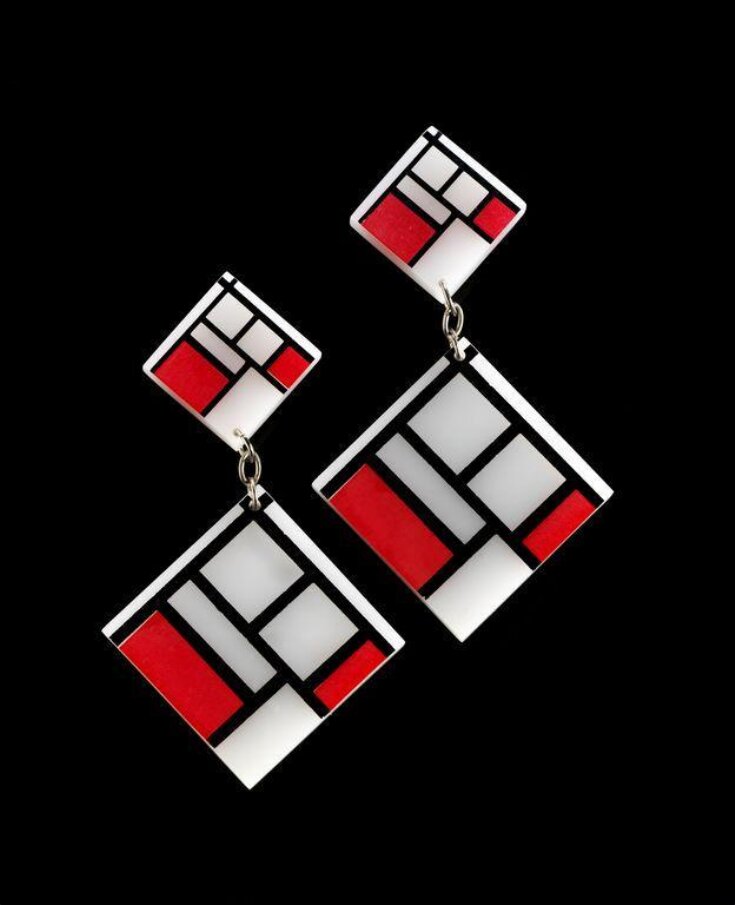
Optik Art Jewellery by Ramshaw, Wendy, 1963. Victoria and Albert Museum.
Why 1960s vintage jewelry looked so new
The 1960s changed the language of adornment. Postwar restraint gave way to experimentation, and jewelry followed fashion into a world of clean geometry, graphic contrast, and fresh materials. Instead of relying only on diamonds and old hierarchies of value, designers played with acrylic, enamel, silver, polished steel, and dramatic scale.
Moreover, the decade was shaped by technology and image culture. Satellites, plastics, Pop art, Op art, and the race to the moon all filtered into necklaces, cuffs, earrings, and brooches. That is why so much 1960 jewellery still feels startlingly current: it was made for a future people could suddenly picture.
Fashion mattered just as much as fine craftsmanship. 1960s fashion jewellery expanded rapidly because boutiques and mass retail made statement pieces accessible to more women. A white vinyl coat, a printed shift, and oversized earrings could create a complete modern look without requiring an aristocratic jewel box.
Designers who defined the decade
If one name captures the thoughtful radicalism of the era, it is Wendy Ramshaw. Her 1963 Optik Art Jewellery designs, now represented in the Victoria and Albert Museum, distilled the period’s fascination with optical effects into wearable form. Rather than treating jewelry as mere decoration, she approached it as an idea made visible, where pattern, perception, and movement could sit directly on the body.
One can see that spirit in the V&A’s Ramshaw piece from 1963, which belongs to a moment when young British designers were testing the border between studio craft and fashion. These works echoed the visual pulse of Op art without becoming simple copies of painting or graphic design. They felt intelligent, urban, and slightly provocative, exactly right for a culture learning to enjoy visual speed.
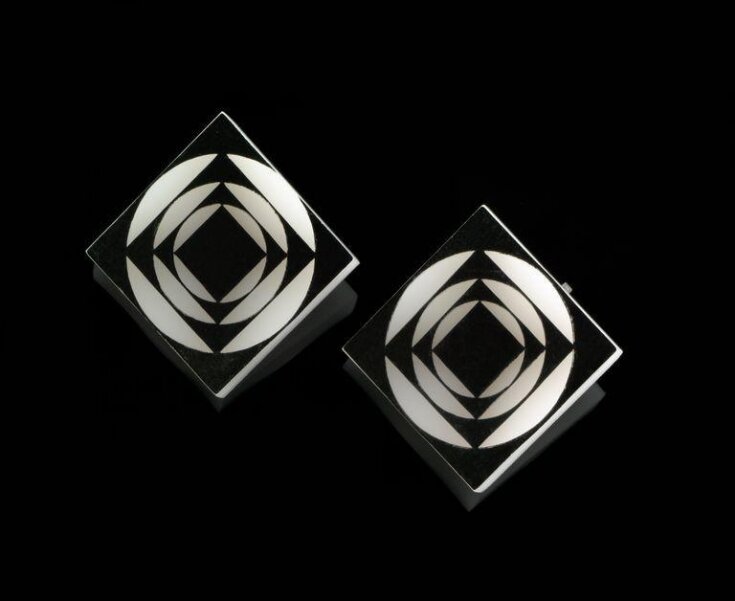
Optik Art Jewellery by Ramshaw, Wendy, 1963. Victoria and Albert Museum.
Beyond this, Scandinavian modernism offered a quieter but equally influential path. Georg Jensen 1960s jewellery carried forward the house’s longstanding excellence in silver, yet the decade sharpened its lines and pared back ornament. Danish design’s cool assurance suited the period perfectly, proving that modern jewelry could be elegant without fuss and sculptural without heaviness.
From the atelier to the boutique
Many of the most interesting 1960s jewellery designers worked across boundaries that older generations kept separate. They moved between workshop practice, art school thinking, industrial methods, and the fast rhythms of fashion. As a result, the decade produced jewels that could be precious, playful, and conceptually ambitious all at once.
What sets the period apart is its refusal to rank style too neatly. Fine houses still produced diamonds and gold for evening wear, but bold costume pieces were often the true carriers of modern taste. Women wore hammered silver pendants with simple wool dresses, or dramatic enamel earrings with sleek haircuts, and the effect could be more memorable than any tiara.
Famous jewellery in the 1960s: cinema, royalty, and the jet set
Jewelry in the 1960s did not live in a vacuum; it was amplified by film, photography, and celebrity. Audrey Hepburn’s association with Tiffany, especially through Breakfast at Tiffany’s, helped keep the idea of the jewel-box fantasy alive even as youth culture turned toward new forms. Meanwhile, Elizabeth Taylor’s extraordinary collection, and the publicity around her gifts from Richard Burton, made headlines that blurred romance, luxury, and spectacle.
By contrast, the youth market found its own icons. The sleek accessories seen on Jean Shrimpton, Twiggy, and the fashionable women orbiting Carnaby Street popularized white plastics, bold chains, giant discs, and earrings that framed the face like graphic punctuation. On screen and in magazines, these pieces read instantly, which mattered in an age when style was increasingly consumed through photographs.
As one contemporary noted, “The fashionable woman wears jewellery not to look rich, but to complete the line of fashion” — The Times, 1966. That observation gets to the heart of the decade. Jewelry was becoming less about static heirloom status and more about styling, silhouette, and the total image.
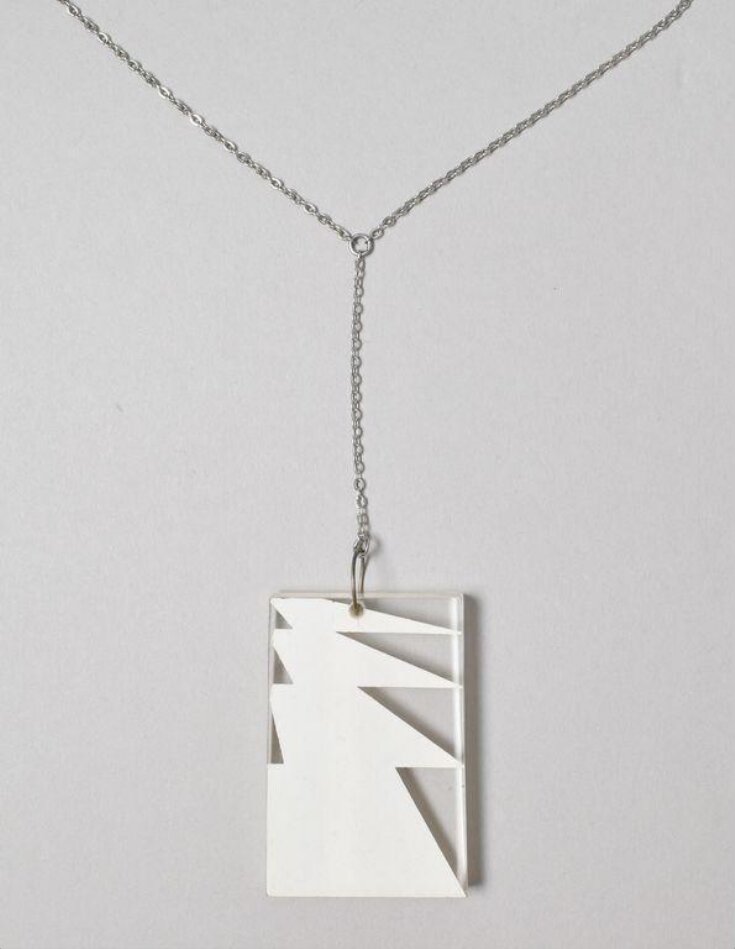
Optik Art Jewellery by Ramshaw, Wendy, 1963. Victoria and Albert Museum.
Royal glamour still played a part, of course. Jacqueline Kennedy’s polished daytime chic encouraged refined pearls and understated gold, while Princess Margaret’s social visibility kept attention on jewels as markers of elegance and occasion. Yet even these elite signals were translated into affordable forms, which is why mid-century collecting today often rewards the eye as much as the wallet.
What to look for when collecting vintage jewelry from the 1960s
Collectors are often drawn first by color and shape. Look for strong contrasts such as black and white, saturated enamels, polished silver surfaces, and repeated geometric motifs. Circles, target forms, kinetic elements, and modular construction are all common clues that a piece belongs to the decade’s modernist vocabulary.
Equally important is scale. The 1960s loved impact, but impact came in different registers: a broad cuff, a long pendant, a cluster of molded beads, or a tiny but striking Op-inspired brooch. Good vintage jewelry from the period usually has a clear visual idea, even when the materials are modest.
- ◆Check closures, clips, and findings for period construction and signs of replacement.
- ◆Look for silver marks, designer signatures, or retailer stamps, especially on Scandinavian and studio pieces.
- ◆Notice whether the design relates to Op art, space-age styling, or Mod fashion rather than older floral traditions.
- ◆Assess condition carefully: enamel loss, cracked resin, and damaged plating can affect both beauty and value.
- ◆Buy the best example you can, but do not dismiss fashion jewelry simply because it is not made of precious stones.
Furthermore, context can deepen enjoyment as much as provenance. A piece linked to the rise of boutique culture, to a known designer, or to a recognizable 1960s silhouette tells a fuller story. That is especially true for collectors interested in how jewelry interacted with clothing, interiors, and the changing social freedoms of the era.
The enduring thrill of the decade lies in its confidence. Whether one is drawn to Ramshaw’s optical intelligence, to the disciplined grace of Scandinavian silver, or to the exuberance of fashion-led costume design, vintage jewelry from the 1960s still carries the energy of a world impatient to reinvent itself. It catches the light the way the decade caught the future: boldly, graphically, and with unmistakable style.
✦ ✦ ✦
Museum object images are reproduced for editorial and educational purposes. All rights remain with the originating institutions.



Leave a Comment