
he 2000s were the decade when men’s grooming moved from “shave, deodorant, haircut” into a broader daily routine: styled hair, face wash, moisturiser, premium razors, body spray, fragrance, stubble maintenance, and eventually body grooming. The change was powered by three forces: the metrosexual conversation, the makeover-TV boom, and a new generation of brands that made men’s care feel mainstream rather than niche.
Mark Simpson’s metrosexual idea became a major cultural reference point in the early 2000s, while Queer Eye for the Straight Guy debuted in July 2003 with a format built around making men more stylish, groomed, and confident without completely changing who they were. Gillette’s Mach3 had already arrived in 1998 after a major global launch, then M3Power in 2004 and Fusion5 in 2006 pushed shaving into a premium technology race. Axe entered the U.S. in 2002 and became one of the decade’s loudest grooming stories, using exaggerated “Axe Effect” ads built around teenage male confidence, attraction, and comedy.
The fun of 2000s grooming is that it was both awkward and ambitious. Men wanted Beckham’s hair, Timberlake’s shine, Depp’s stubble, Pitt’s relaxed ruggedness, and the mysterious confidence promised by body-spray advertising. The decade’s essentials were easy to spot on a bathroom shelf: strong-hold gel, wax or pomade, a blow-dryer, a cartridge razor, shaving gel, aftershave balm, antiperspirant, body spray, fragrance, a facial cleanser, a light moisturiser, a beard trimmer, and, by the mid-2000s, specialised body-grooming tools.

David Beckham — his constantly changing hair and carefully maintained image made him the defining men’s grooming reference of the 2000s. Wikimedia Commons (public domain).
The Cultural Context: Why Grooming Suddenly Got Bigger
The 2000s did not invent men caring about appearance, but they made that care more visible, commercial, and normal. The word “metrosexual” first appeared in Mark Simpson’s 1994 essay and was revived globally after his 2002 writing framed David Beckham as a prime example of the style-conscious modern man. By 2003, the term had become mainstream enough to be named “Word of the Year” by the American Dialect Society, triggering both fascination and backlash in U.S. pop culture.
Television made the grooming conversation more practical. Queer Eye for the Straight Guy premiered on Bravo on 15 July 2003, and its premise was not simply fashion for fashion’s sake, but the idea of making a man “better” through clothes, grooming, home, food, and confidence. That mattered because grooming was presented as daily self-care, not vanity. The format worked because it treated grooming as a skill anyone could learn, which removed a significant cultural barrier for men who were curious but uncertain.
Advertising also helped rebrand grooming as performance. Gillette’s 2004 David Beckham deal connected premium shaving to global sports celebrity. The 2007–2008 Gillette Champions campaign used Tiger Woods, Roger Federer, and Thierry Henry to connect preparation, success, and looking your best, with the campaign message “Prepare to be your Best Today” presenting shaving as part of discipline rather than vanity (Sports Business Journal, Sportcal).
The 2000s taught men that a grooming routine was not a luxury or a sign of vanity — it was preparation. The language shifted from “beauty” to “performance,” and once that reframe took hold, bathroom shelves quietly got more crowded.
The 2000s Grooming Bathroom Shelf
The typical 2000s bathroom shelf told a story in products. By the middle of the decade, a reasonably grooming-aware man might have had most of the following to hand:
| Category | 2000s essential | What it did | Era vibe |
|---|---|---|---|
| Hair | Strong-hold gel | Spikes, wet-look texture, crunchy hold | Pop-star, club-night, school-photo energy |
| Hair | Wax or pomade | Piecey texture, faux hawks, slicker shapes | Beckham-to-barbershop crossover |
| Hair | Blow-dryer | Height, volume, lifted fringe | “I did my hair but I want it to look effortless” |
| Shaving | Cartridge razor | Clean-shaven daily look | Tech-forward masculinity |
| Shaving | Shaving gel or foam | Smoother razor glide | Drugstore staple |
| Post-shave | Aftershave balm | Less sting, more comfort | Skincare begins entering the shave routine |
| Skin | Face wash | Oil control, freshness, acne prevention | Men’s skincare becomes less taboo |
| Skin | Lightweight moisturiser | Hydration without shine | “Not a cream, just practical” positioning |
| Facial hair | Beard/stubble trimmer | 1–3 mm stubble, goatees, edge cleanup | Rugged but managed |
| Body | Antiperspirant | Sweat control | Gym bag and locker-room staple |
| Scent | Body spray | Affordable, youthful fragrance | Axe/Lynx culture |
| Scent | Eau de toilette | Signature going-out scent | Acqua di Giò, Cool Water, Fahrenheit atmosphere |
| Body grooming | Body trimmer | Chest, back, shoulders, below-neck grooming | Mid-2000s “manscaping” enters the mainstream |
Hair: The Decade of Spikes, Faux Hawks, Gel, and Texture
Early-2000s men’s hair was defined by control. It could be messy, but it was usually constructed messy: blow-dried, gelled, separated, pinched, spiked, and sprayed into place. The default finish was often shiny rather than matte, because gel and wet-look products were more culturally visible than today’s dry clays and sea-salt sprays. If the look required effort, it also required the product that made effort visible.

Justin Timberlake at the 2007 Golden Globe Awards — representing the polished pop end of 2000s men’s grooming: clean skin, controlled hair, and red-carpet precision. Photo: Joe Shlabotnik. Wikimedia Commons (CC BY 2.0).
The spiky front
The spiky front was one of the most recognisable looks of the decade. It worked best on short-to-medium hair with a longer top, and the technique was simple: towel-dry, apply gel or mousse, blow-dry upward, then pinch the front into defined spikes. This style belongs to the same cultural world as boy bands, pop-punk, footballer hair, and glossy magazine makeovers. The gel finish was usually high-shine, which gave the spikes visual separation and helped them hold through a school day or a night out.
Modern version: keep the sides softer, use a matte paste instead of a glassy gel, and avoid making every spike identical. The version that works today should look touchable, not helmet-hard.
The faux hawk
The faux hawk was the safer cousin of the punk mohawk. It gave men height and edge without requiring shaved sides or a full subculture commitment. David Beckham helped popularise adventurous footballer hair in the 2000s, and the metrosexual discussion often used Beckham as shorthand for a man who treated grooming, fashion, and image as part of performance. The faux hawk was the hairstyle that most clearly sat at that intersection — it looked athletic but also deliberate, sporty but also styled.
Modern version: ask for a textured crop or low fade with enough length through the centre to style upward. Use a matte clay for a more current look, or a medium-shine wax for the full 2000s revival effect.
Frosted tips and piecey layers
Frosted tips were the high-risk, high-nostalgia move. They were less about natural hair colour and more about visible effort: contrast, shine, and pop-star confidence. The technique involved bleaching or lightening the tips of short, spiked hair, usually leaving the roots darker, which created a deliberate two-tone effect. This is one of the most clearly “2000s” signals, which makes it work best today as a subtle nod rather than a full bleach-and-gel reconstruction.
Modern version: try very soft sun-kissed highlights through the front, not chunky yellow tips. Pair them with natural texture to avoid looking like a costume.
Buzz cuts and crew cuts
The decade was not only about gel. Military-inspired buzz cuts, crew cuts, and close crops remained popular because they were masculine, low-maintenance, and compatible with sports, school, and work. These styles paired especially well with stubble, square sunglasses, and fitted T-shirts. They also suited men who found the faux-hawk and spike world too high-maintenance, or who worked in environments where product-heavy looks were impractical. Clean lines and a sharp neckline could carry the whole look.
Modern version: keep the cut sharp with a barber visit every two to four weeks. Apply sunscreen on the scalp if the hair is very short.
Facial Hair: Stubble Becomes a Routine, Not Laziness
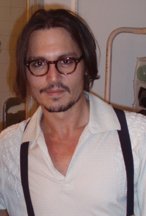
Johnny Depp — the bohemian counterpoint to the polished metrosexual: longer hair, designer stubble, scarves, and jewellery that made “messy” look highly considered. Photo: Edward Scissorhands. Wikimedia Commons (CC BY 2.0).
Stubble was one of the biggest everyday grooming shifts of the decade. In earlier office culture, visible stubble could look unfinished; by the 2000s, the right stubble looked intentional, masculine, and cinematic. The key difference was maintenance: a short beard or 1–3 mm stubble needed a trimmer, neckline cleanup, and cheek-line control. Without maintenance, stubble just looked like forgetting to shave. With it, stubble looked like a deliberate aesthetic decision.
The 2000s man often rotated between three facial-hair modes: clean-shaven for school, work, or formal settings; designer stubble for weekends and dates; and a goatee or short boxed beard for a slightly tougher look. Wahl’s personal-care history shows how trimmer technology had already entered the home routine — including the 1984 Groomsman battery-operated facial-hair trimmer and the 2001 Trim N’ Vac beard and moustache trimmer that collected trimmings (Wahl). By the 2000s, a home trimmer was no longer specialist equipment; it was a bathroom staple.
Modern version: use a trimmer guard between 1 mm and 3 mm for everyday stubble, shave the lower neck clean, and soften the look with a lightweight beard oil only if the hair feels coarse. Avoid drawing the cheek line too low, because that can make stubble look like a chin strap rather than designer stubble.
Shaving: The Razor Technology Race

Gillette Mach3 cartridge — seven years and $750 million in development, the Mach3 was the razor most men carried into the 2000s and the starting point for a decade-long premium arms race. Photo: Crisco 1492. Wikimedia Commons (CC BY-SA 4.0).
Shaving in the 2000s became a technology story more than a technique story. Gillette’s Mach3 was introduced in North America in July 1998, reached Europe and Russia in September 1998, Japan in February 1999, and the rest of Asia, Latin America, and Australia by mid-1999 — making it the razor most men carried into the new decade (Strategy+Business). The product took seven years and $750 million to develop, and Gillette spent heavily to position three blades as a smoother, closer shave with fewer strokes and less irritation.
The arms race continued in 2004 when Gillette launched the M3Power, described by Marketing Week as the first battery-operated system razor, with a vibrating handle designed to make shaving more comfortable. Gillette’s official history marks 2006 as the debut of Fusion5 manual and power razors, with five blades and a promise of a closer, more comfortable shave than Mach3. The message across all three launches was consistent: more blades, more technology, better results. It was an era when the packaging of a razor communicated something about the man who used it.
The 2000s daily shave routine was practical: warm water, shaving gel, cartridge razor, rinse, aftershave or balm. The more skin-aware version replaced alcohol-heavy splash with a soothing balm — a shift that reflected a broader move toward comfort and irritation control. NIVEA MEN’s history notes that its 1980 After Shave Balm created a new category of nurturing aftershaves after research found many men disliked the irritation of strongly alcoholic products (Beiersdorf). By the 2000s, that insight had reached the mass market.
Skincare: The Decade Men Started Admitting They Had Skin
Men’s skincare in the 2000s was usually sold as simple, functional, and non-intimidating. The language was not “beauty”; it was “oil control,” “energy,” “anti-shine,” “post-shave comfort,” “fatigue,” “defense,” and “anti-aging.” This framing mattered because it gave men permission to care about their face without feeling they had crossed into a category coded as feminine. The product was not a cream. It was a system. It was not moisturiser. It was hydration technology.
NIVEA MEN had already introduced mass-market facial care products for men in 1993, and by the 2000s the idea of a men’s face-care aisle had become easier to understand (Beiersdorf). L’Oréal Paris prepared a Men Expert travel-retail rollout in 2004 with a 12-product range targeting problems like shine and loss of firmness, using an “Active Defense System” positioned against shaving, pollution, stress, cold, and wind (The Moodie Davitt Report). FashionUnited’s 2005 reporting described L’Oréal Paris Men’s Expert as an anti-aging series for men, and quoted a L’Oréal executive saying 20% of men already used skincare and another third were “on the cusp” — which captured the decade’s opportunity precisely.
The realistic 2000s skincare routine looked like this, with its modern equivalent:
| Step | 2000s version | Modern upgrade |
|---|---|---|
| Morning cleanse | Foaming face wash, often oil-control | Gentle low-pH cleanser if skin feels tight |
| Shave or trim | Cartridge razor or stubble trimmer | Use shaving cream plus post-shave barrier repair |
| Aftershave | Splash or balm | Alcohol-free balm if skin is sensitive |
| Moisturise | Lightweight lotion or gel | Moisturiser with ceramides or niacinamide |
| SPF | Sometimes included, often skipped | Daily SPF 30+ is the biggest modern improvement |
| Night cleanse | Face wash after work, gym, or going out | Cleanse, then moisturise; add retinoid only if appropriate |
Body Care: Deodorant, Shower Gel, Body Spray, and the Rise of Manscaping

Axe/Lynx deodorant — entering the U.S. market in 2002 and reaching $71 million in sales by 2006, Axe made body spray part of teen male identity through comedy advertising that promised confidence through scent. Photo: Dinkun Chen. Wikimedia Commons (CC BY-SA 4.0).
Body care in the 2000s was loud, scented, and heavily advertised. For many teenagers and young men, the entry point to grooming was not moisturiser or shaving balm but deodorant and body spray. Axe arrived in U.S. drugstores in 2002, and its ads made body spray part of teen male identity by promising confidence, attraction, and social transformation through a cloud of scent. Vox notes that Axe sold $71 million worth of product in 2006, four years after entering the U.S. market — a figure that shows how quickly the brand had moved from novelty to category leader.
The basic body-care kit included antiperspirant, shower gel, body spray, and maybe a separate cologne for nights out. The mistake was overapplication: body spray was often used like a force field rather than a fragrance. The modern correction is simple — two to four sprays maximum, applied to clean skin or clothing from a distance, never as a substitute for washing. The product works; the delivery method was the problem.
Body grooming also became more visible in the mid-2000s. Philips Norelco Bodygroom appeared in 2006, and the campaign’s “ShaveEverywhere” framing tackled an awkward topic that advertising tried to make easier and funnier to discuss (Web Design Museum, ClickZ). This was the moment when trimming below the neck became more openly commercial, even if men still joked about it. The humour was itself a strategy: it acknowledged the awkwardness and moved past it.
Fragrance: The Smell of the 2000s

Giorgio Armani Acqua di Giò — launched in 1996 and one of the most culturally powerful men’s fragrances of the 2000s, representing the decade’s love of fresh, aquatic, and clean-smelling scents. Photo: Javier Velez. Wikimedia Commons (CC BY-SA 3.0).
The 2000s fragrance mood leaned fresh, aquatic, sporty, woody, and clean. Some of the most associated scents were older than the decade but remained culturally powerful: Davidoff Cool Water launched in 1988, Dior Fahrenheit launched in 1988, and Giorgio Armani Acqua di Giò launched in 1996 — making them pre-2000 icons that carried strongly into 2000s grooming culture (Bespoke Unit, Dior). The aquatic category especially suited the decade’s preference for clean, fresh, and “sporty but not sweaty” scent profiles.
The everyday 2000s scent wardrobe generally broke down by occasion:
| Use case | 2000s scent style | Examples to reference |
|---|---|---|
| School or casual daytime | Body spray, clean deodorant, shower-gel freshness | Axe/Lynx-style body spray |
| Work or college | Light aquatic or citrus EDT | Acqua di Giò, Cool Water |
| Night out | Stronger woody, spicy, aromatic scent | Fahrenheit-type profile |
| Gym bag | Antiperspirant plus shower gel | Sport-branded deodorant and body wash |
The modern correction is straightforward: keep the scent profile but lower the volume. One fragrance, applied sparingly, reads more expensive and more considered than layering shower gel, deodorant, spray, and cologne in competing scents.
Brands That Defined the 2000s Men’s Grooming Shelf
| Brand | Why it mattered in the 2000s | Article angle |
|---|---|---|
| Gillette | Mach3 carried into the decade; M3Power arrived in 2004; Fusion5 debuted in 2006 (Strategy+Business, Marketing Week, Gillette) | The premium razor arms race |
| NIVEA MEN | NIVEA FOR MEN had been used since 1986, and NIVEA introduced mass-market men’s facial care in 1993 (Beiersdorf) | The bridge from shaving to skincare |
| L’Oréal Men Expert | A 2004–2005 launch push framed men’s skincare around shine, firmness, anti-aging, and ease of use (The Moodie Davitt Report, FashionUnited) | Mass-market male skincare goes serious |
| American Crew | Founded in 1994 by David Raccuglia and positioned as a leading salon brand created for men and stylists (American Crew) | Barber/salon credibility for men’s styling |
| Axe/Lynx | Entered the U.S. in 2002 and became synonymous with teen body-spray culture and provocative advertising (Vox) | The scent of adolescent confidence |
| Old Spice | Used humorous celebrity-led advertising in the late 2000s, including Will Ferrell as Jackie Moon in 2008 (Los Angeles Times) | The comedy route to modern masculinity |
| Wahl | Home trimmers supported stubble, beard cleanup, and sink-friendly maintenance, including Trim N’ Vac in 2001 (Wahl) | Tools that made facial-hair maintenance routine |
| Philips Norelco | Bodygroom appeared in 2006 and helped commercialise below-neck male grooming (Web Design Museum) | The birth of mainstream manscaping |
Famous Faces and Advertising Moments
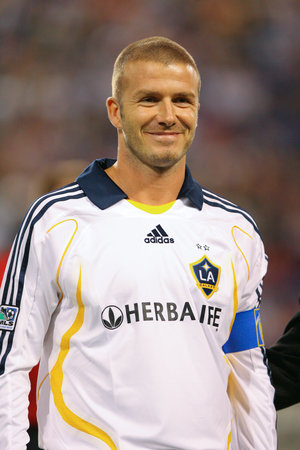
David Beckham at LA Galaxy, November 2007 — by the late 2000s, Beckham’s grooming influence had extended from football pitches to global advertising campaigns. Wikimedia Commons.
David Beckham was the decade’s most obvious grooming icon because he changed hair constantly and made male vanity look athletic, fashionable, and global. His 2004 Gillette agreement put him into worldwide advertising for premium grooming products, especially the M3Power razor. Sports Business Journal reported conflicting estimates for the deal ranging from a USA Today estimate of $10 million to reports the contract could be worth up to $73 million, with Gillette disputing the higher figure. Whatever the exact number, the partnership made Beckham the face of the razor-technology arms race and connected premium grooming to sports performance globally.
Justin Timberlake represents the pop version of 2000s grooming: controlled hair, clean skin, red-carpet polish, and the move from boy-band styling into adult celebrity presentation. His appearance at the 2007 Golden Globes — groomed, sharp, and visibly put-together — captured the more polished end of what the decade offered men who wanted to look good without looking effortful.
Johnny Depp represented the more bohemian alternative: longer hair, facial hair, eyeliner-adjacent rock styling, scarves, jewellery, and a sense that “messy” could still be highly styled. His look was an important counterpoint to the clean-shaven metrosexual ideal because it showed that grooming investment and a carefully dishevelled appearance were not contradictions. You could spend real effort on looking like you had not tried.
Gillette’s Champions campaign shifted grooming advertising from individual celebrity beauty to sports preparation. The campaign featured Tiger Woods, Roger Federer, and Thierry Henry with the message “Prepare to be your Best Today,” presenting shaving as part of discipline, success, and everyday performance (Sportcal). It was a significant reframe: razors were no longer about smoothness or comfort, but about the psychology of preparation.
Old Spice showed another path entirely: absurd humour. In 2008, Old Spice used Will Ferrell in character as Jackie Moon from Semi-Pro for eight ads promoting Old Spice Pro Strength antiperspirant. This proved that late-2000s men’s grooming advertising could be self-aware, funny, and theatrical rather than only aspirational. The brand’s willingness to be ridiculous was, paradoxically, what made it credible (Los Angeles Times).
A Day-to-Day 2000s-Inspired Routine for Today
The trick when reviving a 2000s routine is to keep the structure and lose the excess. Below is how the daily routine translates, decade by decade.
Morning
- Cleanse with a gentle foaming face wash. The 2000s version would likely be oil-control or “energising”; the modern version should avoid stripping the skin.
- Shave or trim. Use a cartridge razor for a clean 2000s finish, or set a trimmer to 1–3 mm for stubble.
- Apply aftershave balm. This keeps the 2000s shaving routine but removes the harsh alcohol sting.
- Moisturise with SPF. This is the biggest modern upgrade — many 2000s routines treated SPF as optional.
- Style hair. For a true 2000s look, use mousse or gel and blow-dry upward. For a modernised version, use matte paste or clay.
- Use scent carefully. Choose either deodorant plus fragrance or deodorant plus body spray, not all products at maximum strength.
After work, gym, or school
- Shower with a simple body wash.
- Reapply deodorant if needed.
- Restyle hair with water-soluble product if the original product allows it.
- Use a clean shirt before adding fragrance. Scent should not cover sweat.
Evening
- Cleanse the face again if you used heavy styling products, sunscreen, or spent time outside.
- Moisturise lightly.
- Trim stubble edges every one to three days.
- Wash out gel before bed if the hair feels stiff or product-heavy.
Weekly
- Clean the trimmer guard and razor handle.
- Replace dull blades.
- Trim nose hair, neckline, and stray eyebrow hairs.
- Deep-clean hair product buildup with a clarifying shampoo if using gel or wax often.
- Book haircuts more frequently if wearing a sharp faux hawk, crew cut, crop, or high-maintenance fringe.
How to Make 2000s Grooming Look Good Now
The trick is to borrow the structure, not the excess. Keep the 2000s confidence, shine, and defined silhouette, but soften the finish. Use less gel, choose cleaner skincare, keep body spray subtle, and avoid making the look feel like a costume.
Good modern combinations:
- 2000s spiky front plus matte texture instead of high-gloss gel.
- Beckham-inspired faux hawk plus low taper and matte clay.
- Designer stubble plus alcohol-free aftershave balm.
- Acqua-style aquatic fragrance plus unscented deodorant.
- Clean shave plus SPF moisturiser.
- Body grooming with a trimmer guard, not a bare razor everywhere.
Avoid these mistakes:
- Too much body spray, applied like a force field.
- Hair gel that flakes or looks wet all day.
- Overplucked eyebrows.
- Razor burn hidden under aftershave.
- Frosted tips that are too yellow or too chunky.
- Wearing three competing scents at once: shower gel, deodorant, body spray, and cologne.
The 2000s were a turning point because men’s grooming became more public, more product-driven, and more emotionally tied to confidence. The decade gave us crunchy spikes, faux hawks, designer stubble, premium cartridge razors, body spray clouds, early men’s anti-aging claims, celebrity razor campaigns, and the idea that a man’s bathroom shelf could include more than soap and shaving foam.
Final Thoughts
The best way to revive the 2000s grooming look today is to treat it as inspiration, not reenactment. Keep the defined hair, clean shave or controlled stubble, fresh scent, and practical skincare, but modernise the details with gentler products, better SPF, lighter fragrance application, and softer styling finishes. Done well, 2000s grooming still feels confident, fun, and surprisingly wearable.
The decade mattered not because everything it did was right, but because it made men’s grooming a legitimate, commercial, and culturally visible conversation. The metrosexual debate, the makeover television format, the premium razor campaigns, the body spray advertising, and the expansion of men’s skincare all happened within the same ten years — and all of them moved the needle on what men thought a grooming routine should look like. We are still living in the world those ten years built.
✦ ✦ ✦
Further reading: FIT fashion history · Vox on Axe/Lynx body spray history · Beiersdorf NIVEA MEN history · Gillette brand history
Images reproduced for editorial and educational purposes under their respective licences. All rights remain with the originating authors and institutions.

Leave a Comment