
980s accessories were not quiet background details. They were the visual punctuation marks of the decade: oversized sunglasses, glossy plastic frames, chunky hats, silk scarves, lace gloves, leather fingerless gloves, bandanas, gold chains, bright headbands, and anything else that could make an outfit look bigger, richer, sportier, or more rebellious.
The 1980s loved contrast. Office fashion became sharper and broader through power dressing. Music videos made style move faster. Hip-hop turned streetwear into a cultural force. Aerobics made sweatbands, leggings, and bright colors part of everyday fashion. Pop stars turned small accessories into instantly recognizable symbols. In other words, if the 1970s often leaned earthy and relaxed, the 1980s asked a different question: how much personality can one outfit hold?
The Fashion Institute of Technology describes the 1980s as a decade strongly associated with power dressing, padded shoulders, vibrant colors, big hair, bold accessories, pointed shoes, and spiked heels. FIT Fashion History also notes that by the 1980s, over-the-top accessories—including bold designer handbags—helped express a new attitude toward flaunting wealth and status.
Sunglasses in the 1980s: Cool, Expensive, and a Little Bit Untouchable

Ray-Ban Original Wayfarer sunglasses, the defining eyewear shape of the decade. Wikimedia Commons.
Sunglasses became one of the most important 1980s accessories because they did three things at once. They protected your eyes, shaped your face, and created instant attitude. In the 1980s, sunglasses were not only for beaches or driving. They belonged in music videos, movie posters, clubs, magazine shoots, and shopping malls.
The main sunglasses looks of the decade were oversized frames, Wayfarers, aviators, mirrored lenses, colored lenses, and futuristic geometric shapes. The bigger frames matched the bigger fashion language of the decade: bigger hair, bigger shoulders, bigger logos, and bigger personalities.
Wayfarers and the movie-star effect
Ray-Ban’s own glasses history page lists the Original Wayfarer as a 1952 design and connects it with the art scene of the 1980s and the forefront of hip-hop culture. The Wayfarer’s 1980s comeback is closely tied to film and celebrity culture. Tom Cruise’s black Wayfarers in Risky Business gave the frames a rebellious, teenage, rich-kid-in-trouble energy. A few years later, Top Gun helped make aviators look heroic, military, and cinematic.
The important point is that sunglasses became part of character building. They told audiences who someone was before the person even spoke. Put on Wayfarers and you looked cool, sarcastic, and possibly dangerous. Put on aviators and you looked confident, fast, and slightly untouchable. Put on mirrored wraparounds and you looked like you might either race a motorcycle or join a synth-pop video.
Oversized, mirrored, and colored lenses
The decade also loved lenses that were difficult to ignore. Mirrored lenses in silver, gold, blue, and pink had a sporty, futuristic feel. Colored lenses matched the decade’s obsession with neon, pastels, and artificial brightness. These were not subtle accessories. They turned the face into a design object.
The Metropolitan Museum of Art holds a mid-1980s pair of Gianfranco Ferré sunglasses made from cellulose acetate plastic and brass—a reminder that 1980s sunglasses were not only pop-culture souvenirs. They were also part of designer fashion, using bold materials and architectural shapes.
The 1980s sunglasses moment was also a status moment. Which frames you chose said something about who you wanted to be, where you wanted to be seen, and how seriously you took your own image.
Hats in the 1980s: From Power Dressing to Street Identity

Baseball cap, central to 1980s hip-hop and streetwear identity. Wikimedia Commons.
Hats in the 1980s moved between very different worlds. One hat could suggest executive polish, another could signal streetwear credibility, and another could simply say that the wearer had spent too much time watching music videos and wanted everyone to know it.
Fedoras, wide brims, and power dressing
Power dressing was one of the most recognizable fashion movements of the decade. The FIT fashion history timeline links 1980s power dressing with padded shoulders, bold accessories, vibrant color, and the influence of television shows such as Dynasty. Structured hats, wide-brim styles, and polished dress hats worked well with tailored coats, suits, and dramatic silhouettes. They made outfits look more intentional and often more expensive.
In a decade fascinated by designer labels and wealth signaling, a hat could complete a power look without requiring an entirely new wardrobe. It made the silhouette taller, the gesture broader, and the message clearer.
Baseball caps and hip-hop influence
Baseball caps became part of a broader sportswear and streetwear language. By the 1980s, casual accessories were not just casual. They could show music taste, neighborhood identity, team loyalty, and attitude.
Hip-hop made this especially important. Run-D.M.C., LL Cool J, and other artists helped turn street clothing into style with cultural power. The Rock & Roll Hall of Fame notes that Run-D.M.C. transformed the sound, look, and attitude of hip-hop and became the first non-athletes to receive a sneaker endorsement deal with Adidas. Caps, bucket hats, tracksuits, sneakers, sunglasses, and gold chains were not random extras. They were part of a new visual vocabulary that connected music, city life, confidence, and resistance.
The Smithsonian’s Run-D.M.C. Adidas Superstar object page shows how closely 1980s hip-hop identity became linked to specific fashion items and brands—each accessory a deliberate choice, not an accident.
Scarves, Bandanas, and Headbands: The Flexible Accessories of the Decade

Colorful bandanas, a fixture of 1980s punk, rock, aerobics, and streetwear. Wikimedia Commons / Steven Depolo (CC BY 2.0).
Scarves and bandanas were among the most versatile 1980s accessories because they could move around the body. A scarf could go around the neck, wrist, waist, handbag, ponytail, or forehead. A bandana could look punk, athletic, rock, biker, or street depending on how it was tied.
Silk scarves and designer polish
Silk scarves gave 1980s outfits a glossy finish. They worked with power suits, blouses, oversized coats, and evening looks. Prints were often bold: geometric patterns, bright florals, chains, animal motifs, and abstract shapes. The FIT “Head to Toe” accessories exhibition explains that accessories have long communicated social values, identity, status, class, and cultural meaning—and 1980s scarves were a masterclass in all of those signals at once.
In a decade fascinated by designer labels, a scarf could also act as a visible luxury marker without requiring a full designer outfit. A bold Hermès or knockoff silk square at the collar could complete the power-dressing look with a single knot.
Bandanas and headbands
Bandanas and headbands brought the decade’s casual and subcultural sides to life. In punk and rock styling, a bandana could look rough, improvised, and anti-establishment. In aerobics and dance culture, a headband was practical but also very visible. In skate and street styles, fabric accessories added color and personality without looking too formal.
The aerobics boom helped make headbands, sweatbands, leg warmers, and bright workout colors part of the decade’s visual memory. Even when people were not exercising, the look suggested motion, youth, energy, and a slightly theatrical relationship with sweat. The 1980s may be the only decade where a headband could make someone look athletic, punk, pop, or like an extra in a dance movie depending on the rest of the outfit.
Gloves in the 1980s: Elegance, Rebellion, and Pop-Star Magic
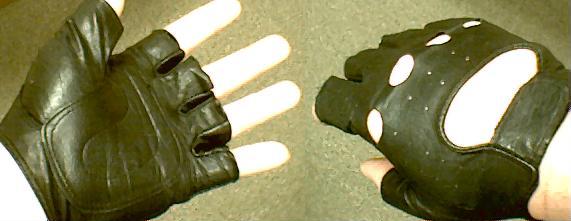
Leather fingerless gloves, worn across punk, metal, biker, and pop styling in the 1980s. Wikimedia Commons.
Gloves were one of the most expressive 1980s accessories because they carried older meanings and new meanings at the same time. Long gloves could look glamorous and formal. Lace gloves could look romantic or provocative. Fingerless leather gloves could look punk, metal, biker, or street.
Lace gloves and Madonna’s influence
Madonna helped make lace, mesh, fingerless gloves, layered jewelry, crosses, bows, and thrift-shop-meets-club-kid styling part of mainstream fashion conversation. Her early 1980s look felt homemade, rebellious, feminine, and tough at the same time.
The appeal of lace gloves was that they looked delicate but not obedient. Paired with messy hair, stacks of bracelets, leggings, boots, and cropped tops, they helped create a style that felt playful and defiant. They were inexpensive enough to copy and dramatic enough to notice.
Michael Jackson’s single glove
Michael Jackson turned one glove into one of the most famous accessories in pop history. TIME reports that Jackson debuted the crystal-encrusted glove during the 1983 Motown 25 television special, where it became one of his most recognizable wardrobe symbols. The glove became such a sensation that by 1984 a New Jersey high school had banned students from wearing a single white glove. That is the power of 1980s accessories in one story: one glove was enough to become a school problem.
Fingerless leather gloves
Fingerless gloves had a very different mood. They suggested movement, grip, nightlife, music, and rebellion. They were practical for bikers and performers, but in fashion they became a shorthand for toughness. Add fishnet, studs, leather, denim, or ripped fabric, and the message changed immediately from elegance to edge.
Style Icons Who Made 1980s Accessories Famous
The 1980s were driven by visual icons. Music television, movie posters, magazines, and celebrity culture helped accessories travel quickly from screen to street.
Madonna
Madonna made accessories feel mix-and-match, rebellious, and personal. Lace gloves, layered necklaces, crosses, headbands, bows, bracelets, and thrift-style combinations became part of her early visual signature. Her influence was important because the look was copyable. Fans did not need couture to imitate it. They needed confidence, lace, jewelry, and a willingness to clash things on purpose.
Michael Jackson
Michael Jackson showed that one accessory could become a global symbol. The single glove, aviator-style sunglasses, military-inspired jackets, white socks, and loafers created a highly controlled visual language. His accessories did not look accidental. They looked choreographed.
Run-D.M.C. and hip-hop artists
Run-D.M.C. helped make streetwear look powerful and intentional. Their Adidas sneakers, tracksuits, hats, sunglasses, and chains became part of hip-hop’s movement into mainstream fashion. The look was direct, graphic, and authentic to the group’s identity. The Rock & Roll Hall of Fame credits them with transforming the sound, look, and attitude of hip-hop.
Princess Diana and power dressing
Princess Diana became one of the decade’s most watched fashion figures. Her 1980s style included wide shoulders, bold colors, dramatic eveningwear, hats, gloves, and polished accessories. The FIT fashion history timeline discusses her wide shoulder pads, bold patterns, glitzy embellishments, and Catherine Walker power suits. She showed how formal accessories could still feel modern and media-friendly.
Why 1980s Accessories Still Matter
The reason 1980s accessories keep returning is simple: they are easy to recognize and easy to remix. A pair of black Wayfarers can still make an outfit sharper. A baseball cap can still make fashion feel casual and street-aware. A silk scarf can still add polish. Fingerless gloves still signal rebellion. Bandanas still move between workwear, music, skate, biker, and festival style.
The decade’s best accessories were also emotionally clear. They expressed confidence, fun, ambition, rebellion, glamour, athletic energy, and sometimes pure ridiculousness. That is why designers and vintage collectors keep returning to them. The 1980s understood something very modern: accessories are not afterthoughts. They are identity tools.
How to Collect 1980s Vintage Accessories Today
If you are collecting 1980s accessories, look for pieces with strong shape, color, label, and condition. Plastic can crack or discolor, especially sunglasses and costume jewelry. Elastic can lose stretch in gloves, headbands, and belts. Silk scarves can show staining, fading, or pulled threads. Leather gloves may dry out if they were stored badly.
For sunglasses, check hinges, lens scratches, frame warping, and logo placement. For hats, check sweatbands, inner labels, shape, and moth damage. For scarves, check hems and fabric quality. For gloves, check stitching, lining, and whether the pair actually matches.
Good places to search include thrift shops, vintage stores, estate sales, online marketplaces, specialist vintage dealers, and museum collection pages for reference. Museum pages are especially useful because they help you learn what real period pieces looked like. Useful starting points include the FIT 1980s fashion timeline, the FIT “Head to Toe” exhibition, and the Met’s mid-1980s Ferré sunglasses.
Final Thoughts
1980s accessories were bold because the decade itself was bold. Sunglasses turned faces into movie posters. Hats moved from boardrooms to hip-hop stages. Scarves and bandanas added color, motion, and attitude. Gloves shifted from old-school elegance to pop-star spectacle and punk rebellion.
What makes 1980s accessories so fun today is that they still feel alive. They are dramatic without needing explanation. They invite people to play with fashion rather than simply wear it. Whether you are building a vintage collection, styling a retro outfit, or writing about 1980s fashion, these accessories prove that the smallest details can carry the loudest message.
✦ ✦ ✦
Museum object images are reproduced for editorial and educational purposes. All rights remain with the originating institutions. Wikimedia Commons images are used under their respective licenses (CC0, Public Domain, CC BY 2.0, CC BY 2.5) with attribution as noted in captions.


Leave a Comment